
A Calgary Parents Guide to Raising Confident Problem Solvers
Many children who struggle with math don’t actually lack ability — they lack confidence.
Parents in Calgary often notice the same pattern. A child who once enjoyed numbers suddenly begins saying things like:
- “I’m bad at math.”
- “Math is too hard.”
- “I’ll never understand this.”
Over time, this belief becomes stronger than the math itself.
The good news is that math confidence can be built, and when it is, academic improvement usually follows naturally.
In this guide, we’ll explore practical ways Calgary parents can help their children develop strong math confidence and problem‑solving skills both at home and through structured learning support.
Why Math Confidence Matters More Than You Think
Confidence plays a huge role in how children approach math.
When kids believe they can improve, they are more willing to:
- Try challenging problems
- Ask questions
- Learn from mistakes
- Practice consistently
But when confidence drops, children start avoiding math altogether.
Many students who eventually seek math tutoring in Calgary aren’t struggling because they cannot learn math — they are struggling because they stopped believing they can.
Signs Your Child May Be Losing Math Confidence
Recognizing the early signs can help parents intervene sooner.
Look for behaviors such as:
- Avoiding math homework
- Getting frustrated quickly with simple problems
- Saying “I’m just bad at math”
- Rushing through assignments to finish faster
- Anxiety before math tests
These signs often appear before grades begin to drop, which makes early support very important.
You can also explore the most common reasons students struggle with math in our guide: Why Kids Struggle with Math (Calgary Parents Guide).
What Causes Low Math Confidence?
Several common factors affect children’s confidence with math.
Gaps in Foundational Skills
If children miss key concepts like number sense, fractions, or multiplication, new topics become much harder to understand.
Fear of Making Mistakes
Some children begin to see mistakes as failure instead of part of learning.
Negative Experiences in the Classroom
Large class sizes or fast-paced lessons can leave some students behind without enough individual support.
Repeated Frustration at Home
Even well‑meaning homework help can sometimes increase stress if the explanations don’t match what the child learned at school.
Practical Ways to Build Math Confidence at Home
Parents play a powerful role in shaping how children feel about math.
Here are effective strategies Calgary families can start using today.
Encourage Effort, Not Just Correct Answers
Instead of focusing only on getting the answer right, praise your child for:
- Trying different strategies
- Explaining their thinking
- Sticking with a challenging problem
This helps children understand that learning math is a process.
Turn Everyday Activities into Math Practice
Math doesn’t have to happen only at a desk.
Daily activities can reinforce math skills naturally:
- Cooking (fractions and measurements)
- Shopping (budgeting and estimation)
- Sports (scores and statistics)
- Building projects (measurement and geometry)
Real‑life applications make math more meaningful and less intimidating.
Make Math Hands‑On
Children learn best when they can see and touch concepts.
Hands-on activities such as:
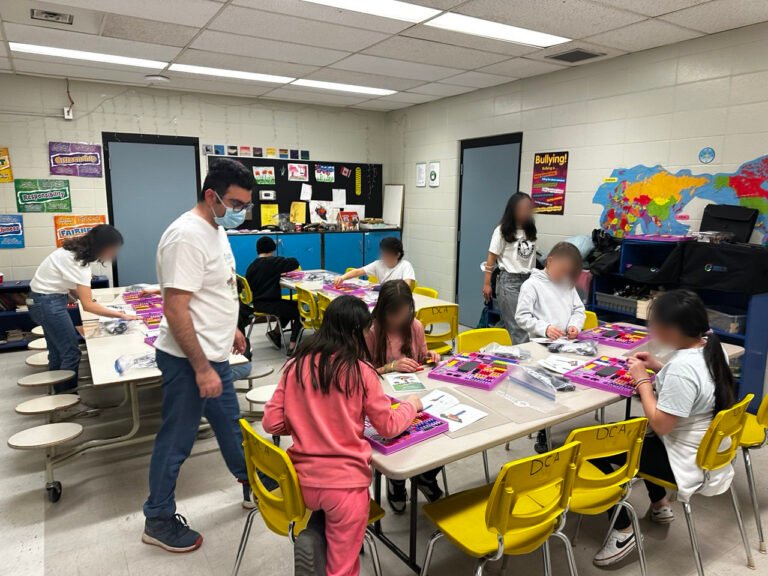
- STEM challenges
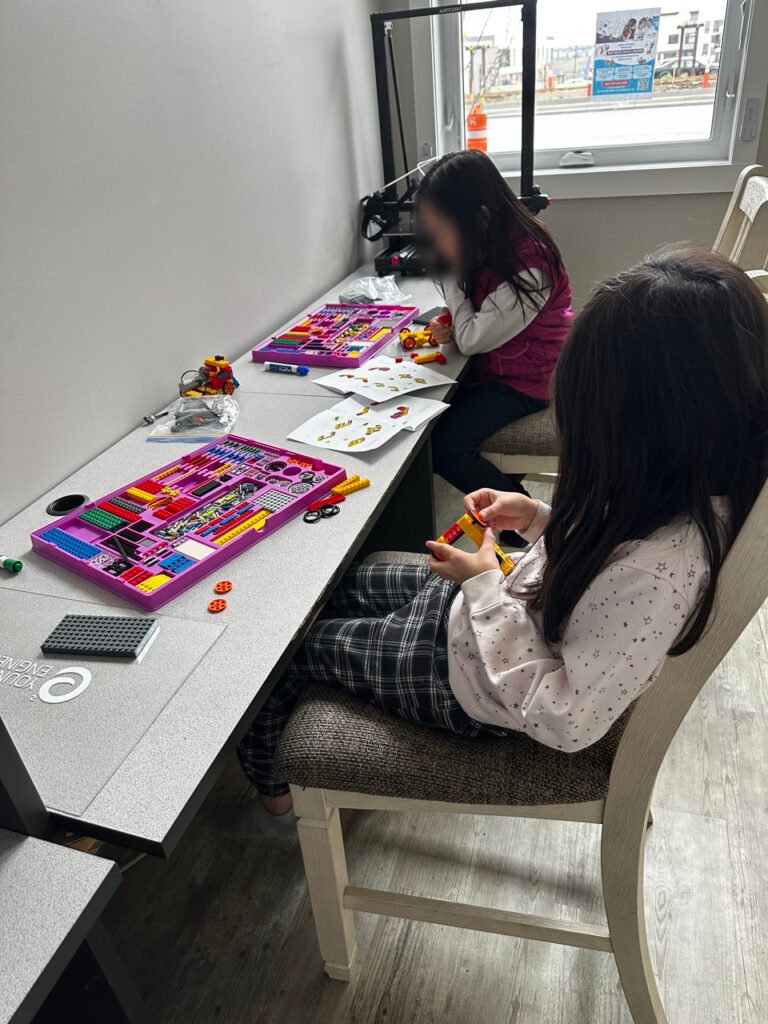
- LEGO engineering projects
- puzzles and logic games
- building structures
help children experience math as problem solving, not memorization.
This is why many Calgary parents are turning to STEM‑based math learning programs that combine creativity with academic skills.
Break Big Problems Into Smaller Steps
Large math problems can feel overwhelming.
Help your child:
- Understand the question
- Identify known information
- Solve step by step
Small wins build confidence quickly.
If you want practical strategies you can use right away, read our guide on How to Help Your Child Improve Math Skills at Home.
The Role of Structured Math Support
Sometimes home support alone is not enough — especially when confidence has already dropped.
Structured programs such as math tutoring in Calgary can help children rebuild both skills and confidence through:
- personalized instruction
- small group learning
- targeted skill development
- supportive learning environments
Children often improve faster when they receive guidance from instructors who specialize in teaching math concepts in clear, engaging ways.

How STEM Learning Helps Build Math Confidence
Traditional math learning often focuses on worksheets and memorization.
STEM‑based programs take a different approach.
Children apply math while:
- building engineering models
- designing structures
- solving real‑world challenges
- experimenting with technology
This hands‑on approach helps children see math as a tool for creativity and problem solving, which significantly improves confidence.
Supporting Your Child’s Math Journey
Building math confidence takes time, patience, and the right environment.
Parents can help by:
- encouraging curiosity
- celebrating progress
- creating positive math experiences
- seeking expert support when needed
When children feel capable and supported, math becomes far less intimidating.

Math Confidence Starts With the Right Support
If your child is struggling with math confidence, the right guidance can make a huge difference.
At InnokidsYYC, we help children develop strong math foundations through:
- personalized math tutoring
- hands‑on STEM learning
- problem‑solving activities
- supportive small group environments
Our goal is not just better grades — but confident young learners who enjoy solving problems.